











About Us     Services     Contact Us                                                                                      Call us!   1300 881 266


Want to Grow?

Free business assessment. Find out what's holding you back right now!
Call 1300 881 266

iQuantum e-News October 2007

 
The Importance of Good
Business Writing

 
Good writing skills are an essential part of running a successful business
 
Professionals who represent a business through well-written, precise communication can greatly influence its success in the competitive global environment where information sharing and customer service are vital. An important example of where good business writing skills can have an impacting effect is email. Email is an excellent method of communicating professionally because it is instantaneous and provides a written record, so details of communications can be referred to again with accuracy. On the other hand, the amount of professional email many people have to sort through each day is great. Good business writing skills allow a professional to consider the time constraints of intended recipients by making the point of the email brief, yet clear. If an email is badly written or grammatically incorrect, the author risks making a poor impression, or worse still, creating serious miscommunication.

These days, much of our communication is carried out via the written word, ranging from official business documents and professional use of email to social online 'chatting' and mobile text messaging. The gap between formal and informal language is also growing thanks to these social trends and it can be a point of difference that greatly affects professional communications. For example, the use of abbreviations such as 'u' for 'you' or 'plz' for 'please', are common in instant communications between friends. However, this kind of informal language is not appropriate for professional correspondence as it assumes a certain relationship and knowledge. Plain, clear and correct use of language reflects an inclusive attitude, and limits the likelihood of miscommunication.

The Internet has created opportunities for broader exposure through online communications, but it has also contributed to an environment where people are bombarded with masses of new information every day. Work places and broader communities in general are made up of people from different generations and backgrounds, so the use of jargon or slang can alienate large portions of an audience. Websites and blogs are key elements in the communication efforts made by many modern businesses. A good website or blog allows a business to communicate with its potential and existing customers, clients and employees in stages ranging from introduction to significant detail. If this public information is not presented with clarity and skill, a business will suffer.

For more information and tips on good business writing visit the Business Writing Blog at http://www.businesswritingblog.com.

Pay-per-click Advertising
 
More and more businesses are turning to the internet to generate leads
 
Search engines provide unprecedented advertising opportunities for website owners aiming to harness visitors who belong to a specific target market. As a result of this recent phenomenon, online advertising in the form of PPC (Pay-Per-Click) has emerged as a successful and popular method of gaining exposure to potential customers, and has converted 'potential' into real interaction for many businesses.
 
Pay-per-click gets its name from the fact that whenever someone clicks on your advertisement and visits your website, you pay an agreed price for their visit.

PPC Advertising is founded on the notion that website owners can determine the context in which their advertisement is displayed in search engine results by bidding for specific phrases or keywords that relate to their product and website. Depending on how much has been paid for the elected keywords, an advertisement will achieve a higher search return placement within the 'sponsored links' when specialised searches containing those keywords are conducted.

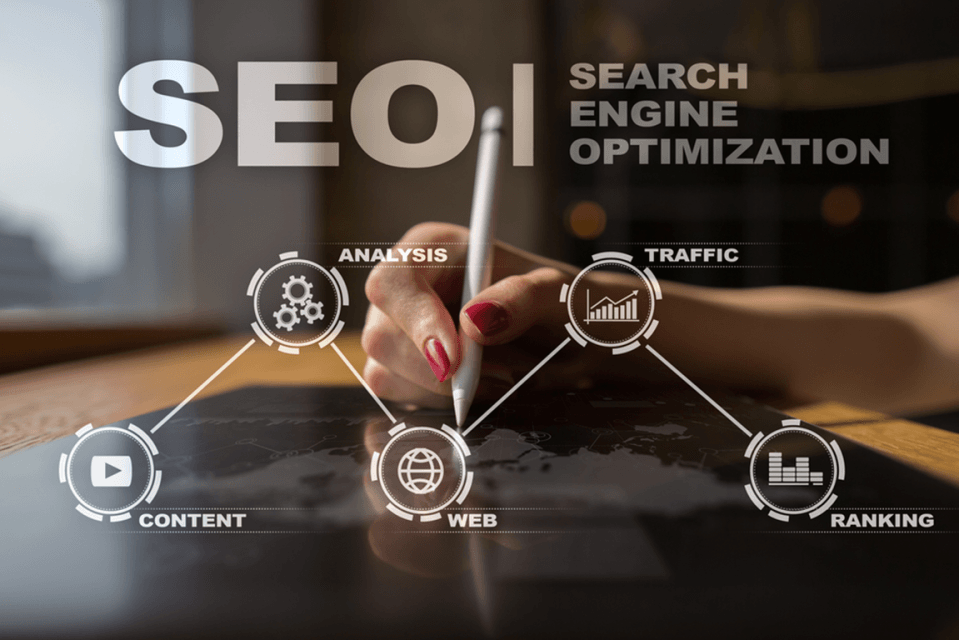
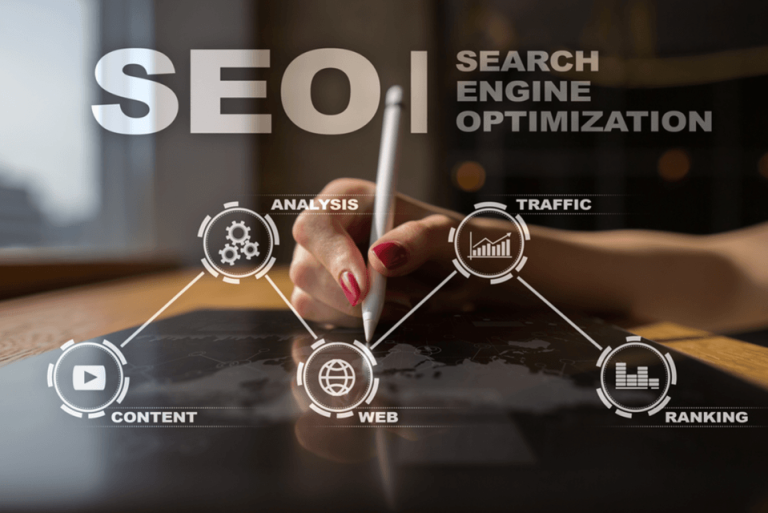
Sponsored links are usually listed to one side of the 'natural' search engine results. Natural listings are displayed as the main body of search results and are not determined by price bidding. They are ranked according to algorithms set by the search engine to assess website content and relevance to keywords. Many website owners aim to optimise the content of their web pages through careful consideration of the words and phrases people use when conducting searches, as well as the procedures that search engines use to determine the ranking of natural results. This process is referred to as SEO (Search Engine Optimisation) and it is a slower, more organic marketing process. Therefore, it is often applied in conjunction with a PPC advertising campaign.

There are a range of PPC advertising suppliers, but the two with the widest coverage are Google Adwords and Yahoo! Search Marketing. One of the major advantages in opting for PPC as a marketing strategy is that it can allow new websites to achieve immediate results in terms of greater targeted site visitation. It is relatively easy and fast to set up an account with a PPC search engine, so an advertisement will start appearing and generating interest as soon as the application is approved. It is also easy to monitor the progress of a PPC campaign and determine whether or not it is viable. An unsuccessful campaign can be quickly turned around with minimal cost by adjusting the elected keywords. The flexibility allowed through PPC advertising means that it is a low risk investment for businesses spanning all budgets. PPC also presents an excellent way to test keywords for businesses that are pursuing a SEO marketing strategy at the same time.

It is clear that PPC has distinct virtues, particularly in regard to short-term promotions. However, it does have a few drawbacks when compared with SEO strategies. Studies have indicated that search engine users are more likely to trust natural search engine results above sponsored results. Therefore, high-ranking natural results for businesses that have invested in website optimisation are likely to receive more clicks than PPC without the per-click price tag. Furthermore, when applied as a long-term marketing strategy PPC will remain as an ongoing cost. SEO campaigns require greater investment in terms of time and money, and they also require ongoing assessment, but the capacity of SEO to return on investment is greater. Ultimately, a thorough web marketing strategy should combine PPC advertising and SEO as complimentary methods.

Marketing Tip: Hire for attitude
 
Not every person is cut out to help you prospect for new customers. You've been told before and you'll hear it again, hire for attitude and train for aptitude. The people in your business who meet and greet customers have to do it with a smile. Prospecting for customers requires people with a pleasing, positive, and agreeable attitude. Anyone without that mindset needs to leave your business! 

Free eBook

The Most Effective

Marketing Strategy

in Existence

Find out more


iQuantum News


Blogs